Showing posts with label prophet. Show all posts

Wednesday, August 9, 2023

Islam is a religion of Peace and love


Islam, one of the world's major religions, is often misunderstood and misrepresented in popular discourse. It is essential to recognize that Islam is fundamentally a religion of peace and love, embodying values of compassion, harmony, and unity. 
This article aims to explore the core principles of peace and love within Islam, highlighting the teachings that promote compassion and forgiveness. 
Additionally, it will address misconceptions and stereotypes associated with Islam, emphasizing the importance of interfaith dialogue and the contributions of Islam to global peace. 
By understanding the peaceful message of Islam, we can foster greater understanding and promote harmony among diverse communities.

1. Introduction to Islam as a Religion of Peace and Love

1.1 Understanding the Perception of Islam

Islam, like any other religion, has been subject to various interpretations and perceptions. Unfortunately, in recent times, it has often been associated with violence and extremism. However, it is important to recognize that these misrepresentations do not accurately reflect the true essence of Islam.

1.2 Defining Peace and Love in the Context of Islam

When we talk about Islam as a religion of peace and love, we mean that its teachings and core principles emphasize harmony, compassion, and unity among humanity. Islam promotes peace not only at an individual level but also within society as a whole. Love, in the Islamic context, is not limited to personal affection but encompasses a broader sense of compassion and mercy towards all creation.

2. The Core Principles of Peace and Love in Islam

2.1 The Concept of Tawhid: Oneness of God and Unity

At the core of Islam is the concept of Tawhid, which signifies the belief in the oneness of God. This belief forms the foundation of unity among Muslims and encourages them to see one another as brothers and sisters, regardless of their background or ethnicity. It promotes a sense of solidarity and harmony, fostering peaceful interactions within the Muslim community and beyond.

2.2 The Importance of Salaam: Peace and Greetings

Islam places great emphasis on the value of salaam, which means peace in Arabic. 
Muslims are encouraged to greet one another with the words "As-salaam alaykum" (peace be upon you). 
This simple greeting serves as a reminder of the importance of peace and sets the tone for harmonious interactions in daily life.

2.3 The Significance of Rahma: Compassion and Mercy

Rahma, meaning mercy and compassion, is another fundamental principle in Islam. Muslims are taught to be compassionate towards all living beings, showing kindness and empathy. This includes not only fellow humans but also animals and the environment. The concept of rahma encourages Muslims to promote peace and love through their actions, benefiting both individuals and society as a whole.

3. Islamic Teachings on Compassion and Forgiveness

3.1 The Prophetic Example of Compassion and Forgiveness

Islam takes inspiration from the life and teachings of the Prophet Muhammad, who exemplified compassion and forgiveness. His actions and words serve as a guide for Muslims to practice these virtues in their own lives. 
The Prophet's forgiving nature, even towards those who wronged him, highlights the importance of forgiveness as a means to maintain peace and foster positive relationships.

3.2 The Role of Forgiveness in Personal and Social Relationships

Forgiveness holds a significant place in Islamic teachings. Muslims are encouraged to forgive others, seeking reconciliation and avoiding grudges or animosity. Through forgiveness, individuals can find inner peace and contribute to a more harmonious society. Additionally, forgiveness helps to maintain healthy relationships, resolve conflicts, and promote understanding among people of different backgrounds.

4. Promoting Harmony and Unity in Islamic Society

4.1 Emphasizing Equality and Justice for All

Islam places great importance on equality and justice. It teaches Muslims to treat all individuals with fairness, regardless of their social status, race, or gender. Upholding these principles fosters a sense of unity and harmony within Islamic societies, creating an environment where peace and love can thrive.

4.2 Fostering Peaceful Coexistence and Interactions

Islamic teachings encourage Muslims to live in harmony with others, regardless of their religious or cultural differences. 
Islam promotes peaceful coexistence, emphasizing the importance of mutual respect and understanding. Building bridges of friendship and cooperation, Muslims are encouraged to engage in positive interactions that promote peace and love within their communities and beyond.

By understanding the true essence of Islam and its emphasis on peace, love, and compassion, we can break the stereotypes and promote a more accurate perception of this beautiful religion. Islam is indeed a religion of peace and love, offering a path towards harmony, unity, and a better world for all.5. Misconceptions and Stereotypes: Addressing Islamophobia

5.1 Identifying Common Misconceptions about Islam
Islamophobia, unfortunately, continues to persist in our society. Many misconceptions exist about Islam, fueling these prejudices. One common misconception is that Islam promotes violence and terrorism. However, this couldn't be further from the truth. The vast majority of Muslims live peaceful lives and condemn any form of violence. 
It's essential to separate the actions of a few extremists from the beliefs of the entire religion.

5.2 Challenging Stereotypes through Education and Dialogue
Education and dialogue are powerful tools to combat Islamophobia. 
By promoting understanding and knowledge about Islam, we can challenge the stereotypes and misconceptions that surround the religion. 
It is crucial to engage in open and respectful conversations, fostering empathy and breaking down barriers. 
Through education, we can build bridges of understanding and create a more inclusive society.

6. Islam's Contribution to Interfaith Dialogue and Global Peace

6.1 Building Bridges of Understanding among Different Faiths
Islam emphasizes the importance of coexistence and harmony with people of other faiths. 
Muslims believe in the unity of all people and respect the diversity of beliefs. Interfaith dialogue allows us to learn from one another, celebrate our differences, and find common ground. 
By fostering relationships and understanding, we can build bridges of peace and promote a sense of global community.

6.2 Collaborative Efforts for Social Justice and Humanitarian Causes
Islam encourages its followers to actively contribute to social justice and humanitarian causes. Muslims are called upon to address issues such as poverty, inequality, and environmental degradation. By working together, people of different faiths can join hands to tackle these challenges, making the world a more just and compassionate place. 
Islam's emphasis on social justice provides a solid foundation for interfaith efforts in promoting global peace.

7. Challenges and Opportunities in Practicing Peaceful Islam

7.1 Internal and External Factors Influencing Peaceful Practices
Despite the peaceful teachings of Islam, internal and external factors can influence how it is practiced. Internal factors such as personal interpretations and cultural traditions may impact the peacefulness of individuals' beliefs. 
External factors such as political conflicts or media bias can also contribute to misunderstandings and divisions. 
Recognizing and addressing these challenges can help create an environment that promotes peaceful Islam.

7.2 Overcoming Extremism and Promoting Moderate Islam
Overcoming extremism is a crucial task in promoting peaceful Islam. 
Extremist ideologies distort the true essence of the religion and contribute to the negative perceptions surrounding it. 
This requires a collective effort from within the Muslim community and support from society at large. Promoting moderate Islam, which embraces compassion, tolerance, and understanding, will help combat extremism and foster a more peaceful narrative.

8. Conclusion: Embracing the Peaceful Message of Islam
Islam is a religion of peace and love. It is essential to challenge the misconceptions and stereotypes that hinder its understanding. 
Through education, dialogue, and interfaith collaboration, we can build a society that embraces the peaceful message of Islam. 
By overcoming internal and external challenges and promoting moderate Islam, we can work towards a world where diverse faiths coexist harmoniously, fostering global peace and understanding.
By delving into its core teachings, we discover the emphasis on unity, compassion, and forgiveness as fundamental values. 
Islam has a vital role to play in promoting interfaith dialogue and contributing to global peace initiatives. 
By embracing the peaceful message of Islam, we can build bridges of harmony and work towards a world where love and compassion prevail.

FAQ

1. Does Islam promote violence?
Islam is often wrongly associated with violence due to the actions of a few extremists who misinterpret its teachings. However, the true essence of Islam is rooted in peace and love. 
The Quran and the teachings of Prophet Muhammad emphasize the importance of compassion, forgiveness, and peaceful coexistence. It is crucial to separate the actions of a few individuals from the broader teachings and beliefs of over a billion Muslims worldwide.

2. How does Islam promote peace and love?
Islam promotes peace and love through its core principles and teachings. 
The concept of Tawhid, the oneness of God, emphasizes unity and equality among all individuals. Islamic teachings also stress the value of Salaam, which represents peace and greetings. 
Additionally, the concept of Rahma, compassion, and mercy, plays a pivotal role in fostering peaceful relationships and resolving conflicts. 
These principles guide Muslims in their daily lives and interactions with others.

3. How can misconceptions and stereotypes about Islam be addressed?
Misconceptions and stereotypes about Islam can be addressed through education, dialogue, and exposure to diverse perspectives. 
Engaging in open and respectful conversations can help dispel misunderstandings and challenge preconceived notions. It is essential to encourage interfaith dialogue, where individuals from different religious backgrounds can come together to share their beliefs and experiences. 
By fostering understanding and promoting accurate information about Islam, we can combat Islamophobia and build bridges of peace.

4. What role does Islam play in global peace initiatives?
Islam has a significant role to play in global peace initiatives. Muslims worldwide are actively involved in promoting peace, social justice, and humanitarian causes. 
Islamic organizations and individuals work hand in hand with other religious and secular groups to address issues such as poverty, conflict resolution, and promoting human rights. 
Islam's emphasis on unity, compassion, and justice can contribute to fostering a more peaceful and harmonious world for all.

Wednesday, August 2, 2023

The Day of Judgement description in Holy Quran


Several surahs in the Quran touch upon the scenario and events of the Day of Judgment. Here are some of the surahs that specifically address or mention the Day of Judgment:

Surah Al-Qiyamah (The Resurrection, Chapter 75):
This surah provides a detailed description of the Day of Judgment, including the resurrection of the dead, the accountability of deeds, and the ultimate judgment and recompense.


Surah Al-Haqqah (The Inevitable Reality, Chapter 69)
This surah describes the certainty and inevitability of the Day of Judgment, emphasizing that it will come to pass and that people will be held accountable for their actions.


Surah Al-Infitar (The Cleaving, Chapter 82):
This surah speaks about the disintegration of the heavens and the earth on the Day of Judgment, highlighting the magnitude and cataclysmic nature of the events.


Surah Al-Ma'arij (The Ascending Stairways, Chapter 70):
This surah mentions the scenes and events of the Day of Judgment, including the questioning of individuals and the separation between the righteous and the wicked.


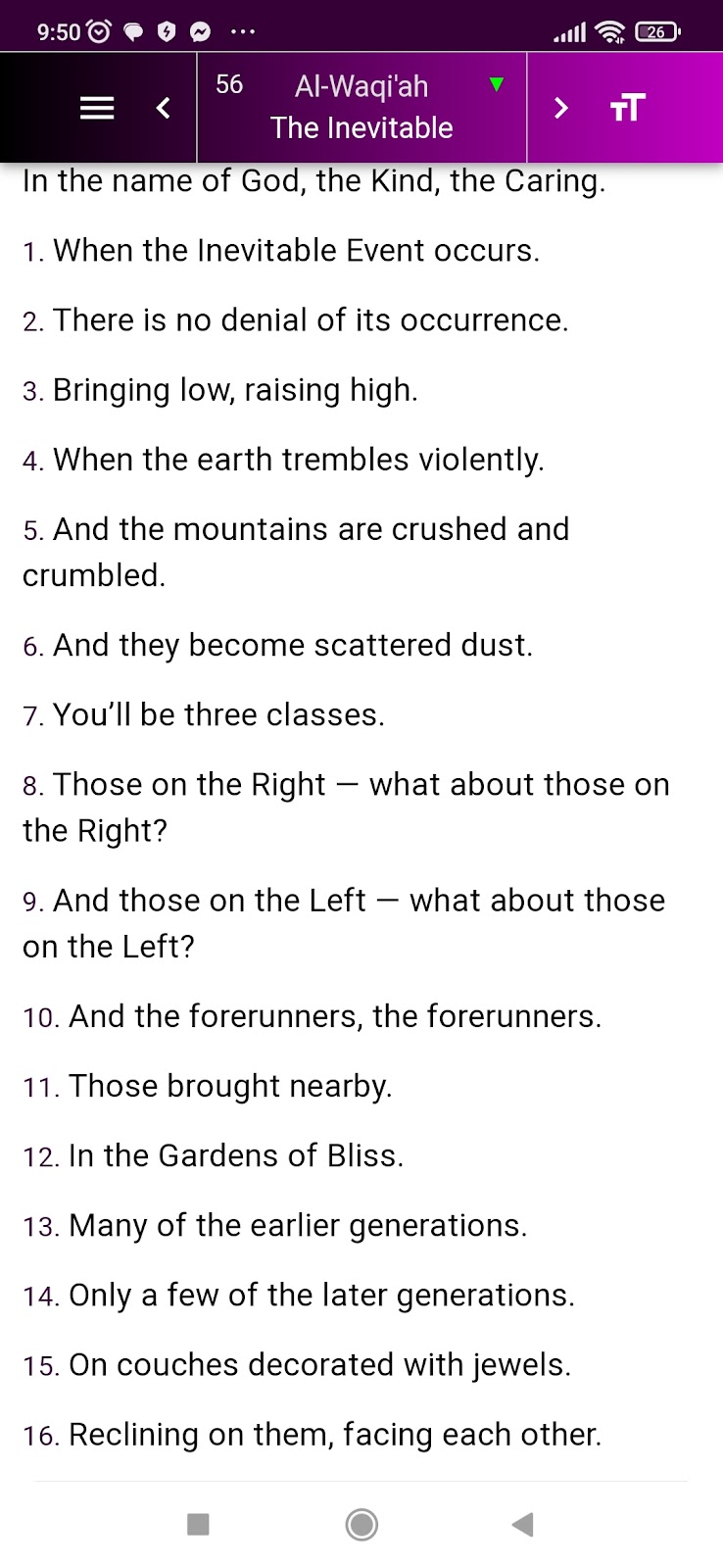
Surah Al-Waqi'ah (The Event, Chapter 56):
This surah depicts the various groups of people on the Day of Judgment and their different fates, emphasizing the distinction between the blessed and the condemned.


Surah Al-Hajj (The Pilgrimage, Chapter 22):
While not exclusively focused on the Day of Judgment, this surah mentions the resurrection and the gathering of all creatures on that day.


Surah An-Nazi'at (Those Who Drag Forth, Chapter 79)
This surah describes the scenes and events of the Day of Judgment, including the resurrection, the gathering of all beings, and the final judgment.


These are just a few examples of the surahs in the Quran that discuss the Day of Judgment. 
The concept of the Day of Judgment is a recurring theme throughout the Quran, and various verses and passages in other surahs also touch upon its events and consequences

Friday, July 28, 2023

Those who write lies about prophet Muhammad

1. The prevalence of false narratives about Islam
Misinformation and false narratives about Islam have become increasingly prevalent in today's society, shaping public opinion and contributing to the perpetuation of stereotypes and prejudices.
This article aims to shed light on the detrimental effects of such lies and explore the motives behind those who propagate them. 
By debunking common misconceptions about Islamic beliefs and practices, examining the role of media in disseminating false information, and discussing strategies to counter these narratives, we can work towards promoting accurate knowledge and fostering religious tolerance and understanding. It is our collective responsibility to challenge and combat the misinformation surrounding Islam, as it is detrimental not only to the Muslim community but also to the fabric of a diverse and inclusive society.


1. Introduction: The prevalence of false narratives about Islam
1.1 The rise of misinformation
In today's age of information overload, it's no surprise that false narratives about Islam have proliferated. With the rise of social media and the ease of sharing information online, anyone with an internet connection can become an amateur expert on Islam. Unfortunately, this has led to the spread of misinformation and false claims.


1.2 Impact on public perception
The consequences of these false narratives go beyond mere confusion; they can have a profound impact on public perception. When people are repeatedly exposed to false information, it can shape their understanding of Islam and lead to widespread misconceptions. This not only harms the image of Islam but also creates a distorted view of Muslims and their beliefs.
2. The impact of false information on public perception
2.1 Shaping stereotypes and prejudices
False narratives about Islam often reinforce existing stereotypes and prejudices. By painting Muslims as inherently violent or backward, these narratives perpetuate harmful generalizations that can fuel discrimination and prejudice. The danger lies in the fact that many people may never personally interact with Muslims and rely solely on these false narratives to form their opinions.
2.2 Fueling Islamophobia
Perhaps the most alarming consequence of false narratives about Islam is the way they fuel Islamophobia. Islamophobia, defined as an irrational fear or hatred of Islam and Muslims, is perpetuated by the spread of misinformation. This not only isolates Muslim communities but also undermines social cohesion and contributes to a climate of fear and hostility.


3. Unveiling the motives behind writing lies about Islam
3.1 Political agendas and power dynamics
The motivations behind writing lies about Islam are often rooted in political agendas and power dynamics. Whether it's governments seeking to justify discriminatory policies or extremist groups attempting to recruit followers, the manipulation of information serves as a means to an end. By demonizing Islam, these actors can advance their own interests at the expense of truth and understanding.
3.2 Prejudice and ignorance
Another driving force behind the propagation of false narratives about Islam is prejudice and ignorance. Some individuals may hold deep-seated biases or harbor misconceptions about Islam, and they use misinformation to confirm their preconceived notions. Others may simply lack knowledge about Islam and unknowingly perpetuate false claims out of ignorance.
4. Common misconceptions: Debunking false claims about Islamic beliefs and practices
4.1 Misconception 1: Violent religion


One of the most prevalent misconceptions about Islam is that it is a violent religion. The truth is that Islam promotes peace and condemns violence, with the vast majority of Muslims living peaceful lives. Acts of terrorism committed by a small minority should not be used to label an entire religion.
4.2 Misconception 2: Oppression of women
Another misconception is that Islam oppresses women. While it is true that some cultural practices in certain countries may oppress women, these practices are not representative of true Islamic teachings. Islam actually grants women numerous rights and promotes gender equality. It's crucial to separate cultural practices from the teachings of Islam.


4.3 Misconception 3: Incompatibility with modernity
Many falsely believe that Islam is incompatible with modernity and scientific advancements. However, Islam has a rich tradition of intellectual and scientific contributions throughout history. Muslim scholars have made groundbreaking discoveries in various fields, demonstrating that Islam and modernity are not mutually exclusive.By debunking these common misconceptions, we can pave the way for a more accurate and nuanced understanding of Islam. It's time to challenge the lies and stereotypes, and foster an environment where truth and empathy prevail over ignorance and prejudice.


5. The role of media in perpetuating falsehoods about Islam
5.1 Sensationalism and biased reporting
If there's one thing the media loves, it's a juicy headline. Sensationalism sells, and when it comes to Islam, this can often lead to biased reporting and the perpetuation of false narratives. Fear-mongering and cherry-picking stories that fit a particular narrative can distort the truth and create a distorted image of Islam. It's important to recognize that not every news story represents the entirety of the Muslim community, just as it wouldn't be fair to judge all Christians by the actions of a few.
5.2 Influence of social media
Ah, the age of social media, where information spreads faster than a cat video going viral. Unfortunately, this also means that false information can spread like wildfire. With the click of a button, anyone can become an instant expert on Islam, sharing misinformation and reinforcing stereotypes. The echo chamber effect of social media can further solidify these false narratives, making it even more difficult to separate fact from fiction. It's crucial to approach social media with a critical eye and fact-check before sharing, to prevent the spread of falsehoods about Islam.
6. Countering false narratives: Strategies for promoting accurate information about Islam
6.1 Education and awareness campaigns
Knowledge is power, and in the case of combating misinformation about Islam, education is key. Promoting accurate information and dispelling common misconceptions through targeted campaigns can help bridge the gap between ignorance and understanding. Schools, community organizations, and religious institutions can play a crucial role in providing accurate resources and fostering dialogue to promote a more nuanced understanding of Islam.
6.2 Engaging with media outlets
While the media can be a source of false narratives, it can also be a powerful ally in dispelling misinformation. Engaging with media outlets, offering expert opinions, and providing accurate information can help counterbalance biased reporting. By actively participating in discussions and challenging false narratives, we can ensure that the media plays a more responsible role in portraying Islam and its diverse followers.
6.3 Interfaith dialogue and collaboration
Understanding breeds tolerance, and what better way to foster understanding than through interfaith dialogue? By engaging in open and respectful conversations with individuals from different religious backgrounds, we can break down stereotypes and build bridges of understanding. Collaborating on projects that focus on shared values and common goals can also help highlight the similarities between different faiths and promote religious harmony.


7. Oppression of women
7.1 Fostering empathy and empathy
In a world that is increasingly polarized, fostering empathy and empathy is more crucial than ever. Empathy allows us to see beyond the surface and understand the experiences and perspectives of others. By putting ourselves in someone else's shoes, we can break down barriers and challenge the stereotypes that perpetuate falsehoods about Islam. It is only through empathy that we can create a more inclusive and understanding society.


7.2 Building bridges between communities
Building bridges between communities is not just a nice idea; it's a necessary step towards a more harmonious society. By actively seeking common ground and finding ways to collaborate and support one another, we can break down the walls of ignorance and fear. Simple acts of kindness, such as attending interfaith events or reaching out to neighbors of different faiths, can go a long way in fostering connections and dispelling false narratives.


8. Conclusion: The collective responsibility to combat misinformation about Islam
In a world plagued by misinformation, it's up to all of us to take a stand against falsehoods about Islam. Whether through education, engaging with media outlets, participating in interfaith dialogue, or promoting empathy and understanding, every action counts. It's a collective responsibility to challenge the narratives that seek to divide us and instead build a world where respect, tolerance, and accurate information prevail. So, let us join forces and write a new chapter of understanding and acceptance for all.

Wednesday, July 26, 2023

Prophet Mohammed is mention in Thora and Gospel


1.1 Background on Prophet Mohammed

Prophet Mohammed, born in the year 570 AD in Mecca, Saudi Arabia, is considered the last and final prophet of Islam. 
He is revered by Muslims worldwide for his teachings and revelations found in the holy book of Islam, the Quran. 
Known for his wisdom, kindness, and exemplary character, Mohammed played a pivotal role in shaping the religion of Islam and its principles.

1.2 Purpose of the Article

The purpose of this article is to explore the historical context surrounding Prophet Mohammed Peace and Blessings be upon Him and shed light on the intriguing topic of his mention in both the Thora and the Gospel.


While the Thora is the sacred text of Judaism, the Gospel refers to the books that make up the New Testament of Christianity. By examining these religious scriptures, we aim to provide a deeper understanding of the connections between Islam, Judaism, and Christianity.

2. Historical Context of Prophet Mohammed


2.1 Early Life of Prophet Mohammed

Prophet Mohammed grew up in a society deeply rooted in paganism and idol worship. However, he maintained a strong sense of spirituality and spent much of his time in solitary reflection. At the age of 40, Mohammed received his first revelation from Allah through the angel Gabriel. This event marked the beginning of his prophetic journey.

2.2 Rise of Islam and Mohammed's Prophethood

After receiving revelations from Allah, Mohammed began spreading the message of Islam, which emphasized monotheism and submission to the will of God. 
Over the course of his life, he faced opposition and persecution from the Meccan society, but his teachings gained a following. 
Eventually, Mohammed and his followers migrated to the city of Medina, where Islam continued to thrive and gain significant influence.

3. References to Prophet Mohammed in the Thora


3.1 Overview of the Thora

The Thora is the sacred scripture of Judaism. It consists of the first five books of the Hebrew Bible, namely Genesis, Exodus, Leviticus, Numbers, and Deuteronomy. 
These books contain religious and moral laws, historical accounts, and teachings that form the foundation of the Jewish faith.

3.2 Specific Mentions of Prophet Mohammed in the Thora

While the Thora does not mention Prophet Mohammed by name, some scholars argue that there are references to him in certain passages. One such example is in Deuteronomy 18:18, where God promises to raise up a prophet like Moses from among the Israelites. Some interpret this as a prophecy pointing towards the coming of Prophet Mohammed.


4. References to Prophet Mohammed in the Gospel


4.1 Overview of the Gospel

The Gospel refers to the books of the New Testament in Christianity, which recount the life, teachings, death, and resurrection of Jesus Christ. These books include Matthew, Mark, Luke, and John and hold immense significance for Christians worldwide.

4.2 Specific Mentions of Prophet Mohammed in the Gospel

Similar to the Thora, the Gospel does not directly mention Prophet Mohammed. However, certain scholars believe that there are indirect references to him or the coming of a future prophet in some passages. For instance, in the Gospel of John 14:16, Jesus mentions the coming of the "Helper" or "Comforter," which some interpret as a reference to Prophet Mohammed.


In conclusion, while there are debates and interpretations surrounding the references to Prophet Mohammed in the Thora and the Gospel, exploring these scriptures provides valuable insights into the interconnectedness and shared historical context between Islam, Judaism, and Christianity. It highlights the ongoing dialogue and discussions between different faiths, fostering a deeper understanding and mutual respect among believers.
5. Comparative Analysis of the Mentions in Thora and Gospel


5.1 Similarities and Differences Between the Mentions


When comparing the mentions of Prophet Mohammed in the Thora and Gospel, it is fascinating to observe both similarities and differences. In the Thora, he is referred to as the "Comforter" or "Spirit of Truth," while in the Gospel, he is known as the "Paraclete" or "Helper." These titles suggest a role of guidance and support.

While both texts acknowledge the coming of a significant figure, the interpretations surrounding the identity of this individual vary. Some argue that the Thora and Gospel references are direct prophecies about Prophet Mohammed, while others believe they symbolize other figures or events. 

5.2 Interpretations and Explanations of the Mentions


Scholars and theologians have proposed different interpretations and explanations regarding the mentions of Prophet Mohammed in the Thora and Gospel. Some see these references as clear indications of his arrival, pointing to historical and linguistic evidence to support their claims. Others take a more metaphorical approach, suggesting that the mentions symbolize the coming of a righteous leader or a period of spiritual enlightenment.

These interpretations not only reveal the diverse perspectives within religious scholarship but also highlight the rich tapestry of religious texts and their potential for multilayered meanings. Whether one chooses to view the mentions as direct prophecies or symbolic representations, they continue to inspire dialogue and contemplation.

6. Implications and Significance of the Mentions of Prophet Mohammed


6.1 Impact on Islamic Theology and Beliefs


The mentions of Prophet Mohammed in the Thora and Gospel hold significant implications for Islamic theology and beliefs. They reinforce the idea of continuity and prophetic succession, emphasizing the interconnectedness of different religious traditions. For Muslims, these references serve as a validation of their faith and provide a sense of unity with earlier Abrahamic traditions.


Moreover, the mentions of Prophet Mohammed invite further exploration of his life and teachings. They prompt Muslims to delve deeper into their understanding of the Prophet's role as a messenger of God and his exemplary character. Overall, the references contribute to the shaping of Islamic theology and reinforce the belief in the finality of prophethood.

6.2 Historical and Interfaith Perspectives


From a historical standpoint, the mentions of Prophet Mohammed provide a glimpse into the interplay between different religions and their evolving relationships. They shed light on the interconnectedness of religious ideas and the historical context in which they emerged. These mentions offer valuable insights into the cultural and religious landscape of the time, facilitating a more nuanced understanding of historical events.

Furthermore, for interfaith dialogue and understanding, acknowledging the mentions of Prophet Mohammed in the Thora and Gospel is crucial. It fosters an atmosphere of mutual respect and appreciation for the shared beliefs and shared figures among different religious traditions. By recognizing the significance of these mentions, individuals from diverse backgrounds can find common ground and engage in meaningful discussions that promote unity and peace.

7. Controversies and Interpretations Surrounding the Mentions


7.1 Debates Among Scholars and Theologians


The mentions of Prophet Mohammed in the Thora and Gospel have not been without controversy and debates among scholars and theologians. The interpretations of these references can vary widely, often leading to spirited discussions and disagreements. Some scholars argue for a more literal understanding of the texts, while others propose metaphorical or symbolic interpretations.

7.2 Criticisms and Rebuttals


The mentions of Prophet Mohammed in the Thora and Gospel have also faced criticisms and rebuttals from various perspectives. Some skeptics question the authenticity of these references, citing linguistic or historical arguments. They argue that the mentions may have been added to the texts at a later date, potentially distorting their original meanings.

However, proponents of these mentions provide counter-arguments, presenting evidence from textual analysis and historical context to support their claims. They contend that dismissing these references would undermine the interconnectedness of religious traditions and the potential for shared understanding.

8. Conclusion


The mentions of Prophet Mohammed in the Thora and Gospel offer intriguing insights into the interconnectedness of monotheistic religion. 
While interpretations may differ, these references contribute to the theological development of Islam and reinforce the notion of unity among religious traditions.

Understanding the significance of these mentions encourages dialogue, fosters interfaith understanding, and promotes the appreciation of shared beliefs. 
The debates and controversies surrounding the interpretations of these references remind us of the ongoing quest for knowledge and the importance of embracing diversity within religious thought. Ultimately, the mentions of Prophet Mohammed serve as a reminder of the enduring impact and influence of religious figures throughout ahistory.


FAQ


1. Are the mentions of Prophet Mohammed in the Thora and Gospel widely accepted?

The acceptance of these mentions varies among religious scholars and theologians. While some interpret the references as alluding to Prophet Mohammed, others hold different views and interpretations.


2. What is the significance of finding references to Prophet Mohammed in these texts?

The discovery of references to Prophet Mohammed in the Thora and Gospel holds significance for interfaith dialogue and understanding. It highlights the Devine message in holy Quran prevailing on all old scriptures.


3. What controversies surround the mentions of Prophet Mohammed in the Thora and Gospel?

The mentions of Prophet Mohammed in these texts have sparked debates and controversies among scholars and religious communities. Some argue that the references were added or misinterpreted, while Muslims see them as evidence of the divine revelation of holy Quran reinforcing their faith.


4. How do the interpretations of these mentions impact interfaith relations?

The interpretations of the mentions of Prophet Mohammed may impact interfaith relations in different ways. While they can foster dialogue and understanding, they can also lead to disagreements and misunderstandings. It is important to approach these discussions with respect, open-mindedness, and a willingness to learn from one another.


Thursday, September 3, 2020

Miraculous story of the Prophets Joseph and Moses


You would certainly be amazed to see the astonishing contrasts in life, when you make a comparison between the two fabulous stories of the exceptional life of the Prophet Joseph and Moses.

Chapter Youssef / Joseph 12
This chapter is dedicated to the life of the prophet Joseph Peace be upon Him since his birth:

3. We narrate to you the most accurate history, by revealing to you this Quran. Although, prior to it, you were of the unaware.

Chapter Al Qasas / History 28 
although fragments of the life of Moses are present in several chapters of the quran, in this chapter we will find a recap of the whole history of the life of Moses, from his birth until the destruction of the reign of Pharaoh.
The table below sums up the video and mentions the contrasts in the lives of these two prestigious Prophets Peace be on Them: